Apply on vietnamemigration.com
Start your Vietnam eVisa here — visa type, travel dates, passenger details, secure payment, and document upload. No need to leave this site for another application page.
Vietnam's 3,200-kilometre coastline stitches urban convenience beside postcard sands—but the country is S-shaped, and weather, water clarity, and vibe shift sharply from north to south. This guide helps you plan a beach holiday along Vietnam's coast: which city-beach hubs fit your style, how to build a logical route, what seasons actually affect swim days, and how to budget in Vietnamese dong (VND) without payment surprises at the pier.
We are a private visa assistance service—not the Government of Vietnam. Beach safety flags, lifeguard coverage, and marine rules are managed locally. The advice below is general travel guidance for 2026 itineraries.
For dedicated island comparisons—Cat Ba, Cham, Phu Quoc, Con Dao—see our best islands in Vietnam guide. This article focuses on mainland coast cities and route logic for beach-centred trips.
Quick answer: Vietnam beach holidays at a glance
| Destination | Vibe | Best for | Ideal length | Best season (rough) | Mid-range budget/day |
|---|---|---|---|---|---|
| Da Nang | City-beach hybrid | Families, first-timers, culture combos | 3–5 nights | Feb–Aug | 800,000–1,400,000 VND |
| Hoi An (coast access) | Heritage + nearby sea | Culture-first with beach afternoons | 2–4 nights | Feb–Aug | 700,000–1,200,000 VND |
| Nha Trang | High-energy resort bay | Resorts, snorkel day trips, dive courses | 3–6 nights | Feb–Oct | 900,000–1,600,000 VND |
| Mui Ne | Wind, dunes, fishing fleets | Kitesurfing, photography | 2–4 nights | Nov–Apr (wind) | 700,000–1,300,000 VND |
| Phu Quoc | Island sunsets, markets | Long beach weeks, families | 4–7 nights | Nov–Apr | 1,000,000–2,500,000 VND |
Visa planning note: Confirm Vietnam visa eligibility by country and match your Vietnam eVisa entry port to your first landing—Da Nang (DAD) for central coast trips, Tan Son Nhat (SGN) for Phu Quoc gateways, Noi Bai (HAN) if you start north before heading south.
Understanding Vietnam's coast: three weather belts
Beach planning fails when travellers expect one "beach season" nationwide. Vietnam runs three distinct coastal weather patterns:
Central coast (Da Nang, Hoi An, Nha Trang)
Dryer window: Roughly February–August for swimmable seas and reliable boat tours.
Rougher period: September–December—typhoon tracks bring heavy rain, onshore wind, and cancelled island day trips. Nha Trang boats and Cham Island speedboats pause most often during this window.
Planning implication: Central beach holidays belong in winter/spring (northern hemisphere) or early summer—not late autumn.
Southern coast and islands (Phu Quoc, southern Mekong delta fringe)
Drier window: November–April—popular with international travellers escaping northern winter.
Wetter period: May–October—afternoon downpours are common but rarely all-day washouts. Domestic holiday crowds peak in summer.
Planning implication: Phu Quoc suits November–March beach weeks; pack flexibility for afternoon rain year-round.
South-central transition (Mui Ne, Phan Thiet)
Wind season: November–April—thermal winds attract kitesurfers; dunes photograph best at dawn before heat haze.
Rain: Summer months see occasional tropical downpours but Mui Ne is drier than Nha Trang in autumn.
Planning implication: Mui Ne is a specialist stop—excellent for wind sports and dune photography, not a default first beach for families seeking calm swim days.
Choosing a coast hub for your 2026 holiday
| Your priority | First choice | Runner-up |
|---|---|---|
| First-time beach + easy logistics | Da Nang | Nha Trang |
| Culture mornings, sea afternoons | Hoi An (beach access via An Bang/Cua Dai) | Da Nang |
| Resort strip, island snorkel tours | Nha Trang | Phu Quoc |
| Kitesurfing and dune photography | Mui Ne | — |
| Week-long barefoot beach reset | Phu Quoc | Con Dao (quieter, harder access) |
| Scuba certification or fun dives | Nha Trang | Phu Quoc or Con Dao — see diving guide |
| Family shallow bays + flights | Da Nang or Phu Quoc | Nha Trang |
Rule of thumb: Pick one primary coast hub per week of holiday. Two nights in four cities is not a beach holiday—it is a transport marathon.
Da Nang: city-beach balance
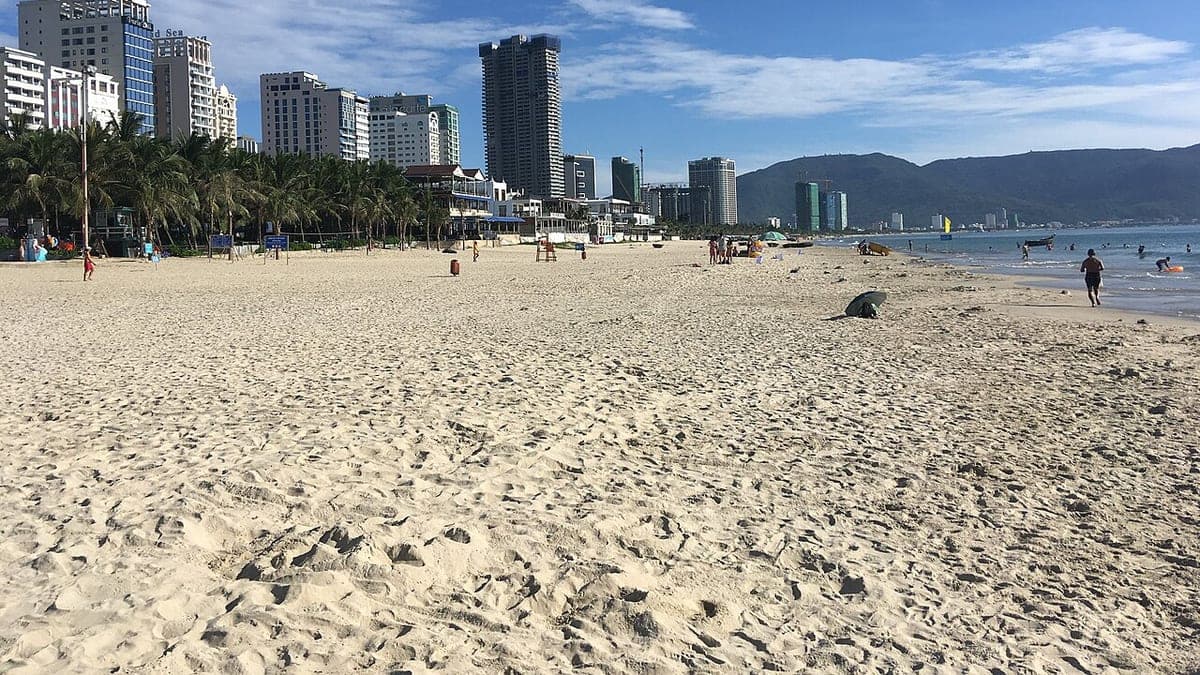
My Khe Beach offers broad sands minutes from Marble Mountains, contemporary cafés, and Da Nang International Airport (DAD). Sunrise swims help jet lag; weekend evenings bring Dragon Bridge fire displays over the Han River.
Da Nang is Vietnam's strongest city-beach hybrid—you get proper urban infrastructure (Grab, malls, hospitals, international dining) beside kilometres of swimmable sand.
What to do beyond the beach
- Marble Mountains (Ngu Hanh Son): Limestone pagodas, caves, and viewpoints—allow half a day. Elevator or stair climb; dress modestly in temple areas.
- Son Tra Peninsula: Lady Buddha viewpoint and coastal loops—scooter rides suit confident riders; hire a car for families.
- Day trip to Hoi An: 30–45 minutes south—combine for a culture-plus-beach itinerary.
- Day trip to Cham Islands: Seasonal speedboats from nearby piers—see the best islands guide for Cham logistics.
- Hai Van Pass: Scenic drive toward Hue—worth a motorbike or car day if you extend north.
Practical Da Nang tips
- Use marked crosswalks—motorbike streams move fast between beach towers and the airport corridor.
- Street meals near the beach often run 50,000–120,000 VND per person; seafood restaurants 150,000–300,000 VND.
- Flagged swim zones on My Khe operate in peak season—confirm lifeguard hours with your hotel.
- Da Nang works as an eVisa entry port—if DAD is your first landing, confirm it appears on your approval PDF.
Da Nang: who it suits and realistic pros/cons
Best for: Families, first-time Vietnam visitors, travellers wanting beach + culture without island flights.
Pros: Excellent airport access, long beach, easy Hoi An and Cham day trips, good mid-range hotel supply.
Cons: Not the whitest sand in Vietnam—Phu Quoc and Con Dao beat it on clarity. Central autumn storms affect boat day trips even when city beaches are usable.
Ideal length: 3–5 nights as a coast anchor.
Hoi An: heritage town with beach access
Hoi An Ancient Town is UNESCO-listed—not a beach resort—but An Bang and Cua Dai beaches sit 4–6 kilometres away. Many travellers base in Hoi An for atmosphere and cycle or taxi to the sea for afternoons.
Beach access from Hoi An
- An Bang Beach: Relaxed cafés, sun beds for rent (50,000–100,000 VND), calmer vibe than Da Nang's urban strip.
- Cua Dai Beach: Closer to Cham Island piers—useful if you plan snorkel day trips.
- Cham Islands: Speedboat day tours depart seasonally—allow a full day and cash for marine fees.
Hoi An coast pairing logic
Days 1–3: Old town lanterns, tailor fittings, food tours.
Day 4: Cham Islands snorkel trip or An Bang beach afternoon.
Days 5–6: Bicycle villages, cooking class, depart from Da Nang airport.
Ideal length: 2–4 nights in Hoi An within a longer central coast block.
Nha Trang: energetic resort bay
High-rise resorts shoulder Tran Phu's palm strip while boats dart toward offshore islands for snorkel picnics. Po Nagar Cham towers anchor cultural mornings before sunscreen afternoons.
Nha Trang is Vietnam's most resort-dense mainland beach city—abundant dive shops, island tour operators, and international dining.
Nha Trang activities
- Island hop tours: Hon Mun, Hon Tam, and similar islets—full-day boat packages 400,000–800,000 VND including lunch.
- Scuba diving: Hon Mun Marine Protected Area suits courses and fun dives—see our Vietnam diving destinations guide.
- Mud baths and hot springs: Thap Ba thermal complex—half-day wellness detour.
- Long Son Pagoda: White Buddha viewpoint over the bay—best early morning.
Season and sea conditions
Winter November–February winds occasionally churn the bay—consult operators each morning before charter deposits. Rainy-season spikes September–December muddy shallows and pause boats.
Ideal length: 3–6 nights for resort time plus one or two activity days.
Budget note: Resort strips price rooms in USD on booking sites but street food remains cash-first in dong. Mid-range daily spend 900,000–1,600,000 VND excluding dive courses.
Mui Ne: wind, dunes, and fairy stream
Red and white sand dunes photograph best at dawn; afternoon thermal winds attract kitesurfers beside fishing fleets. Resorts west of Ham Tien split between quiet lanes and beach-bar playlists—read recent reviews for noise levels.
Mui Ne is not a default family swim beach—currents and wind favour sports over lounging.
Mui Ne highlights
- White Sand Dunes (Bau Trang): Jeep or scooter access; sunrise essential.
- Red Sand Dunes: Closer to town; sunset crowds—arrive early.
- Fairy Stream (Suoi Tien): Ankle-deep wading through coloured clay canyon—grippy soles required on slick sections.
- Kitesurfing lessons: 800,000–2,000,000 VND per session depending on gear and instructor tier.
Mui Ne: who it suits
Best for: Kitesurfers, photographers, travellers who want a 2–4 night specialist stop between Saigon and Nha Trang.
Cons: Beach swimming is secondary; food scene thinner than Da Nang or Hoi An.
Route logic: Common as a stopover on Saigon → Nha Trang overland routes—not a week-long base.
Phu Quoc: island beach week from the coast
Phu Quoc is technically an island, but most travellers treat it as a southern beach holiday hub—fly in, stay a week, fly out. Long west-coast beaches, Duong Dong Night Market, pepper farms, and snorkel day boats make it Vietnam's easiest week-long beach reset.
Phu Quoc essentials
- Flights: Phu Quoc International Airport (PQC) from Ho Chi Minh City (≈1 hour) and seasonal Hanoi routes.
- Long Beach (Bai Truong): Sunset strip near Duong Dong—resorts and cafés line the sand.
- Sao Beach: Whiter sand, busier midday—arrive before 10:00.
- An Thoi archipelago: Southern snorkel and dive boats—pair with the diving guide if scuba is planned.
- Night market seafood: Priced by weight—confirm totals in VND before cooking.
Ideal length: 4–7 nights. Shorter stays waste disproportionate time on airport transfers.
For detailed Phu Quoc vs Con Dao comparisons, ferry alternatives, and island logistics, see the best islands in Vietnam guide.
Sample coast route itineraries
Central coast culture and sea (8–10 days)
Days 1–3: Da Nang base—My Khe mornings, Marble Mountains, food tour.
Days 4–6: Hoi An old town, An Bang beach, optional Cham Islands day trip.
Days 7–8: Hue imperial sites via Hai Van Pass—or extra beach day if weather is strong.
Depart: Da Nang International Airport (DAD).
Budget (mid-range, excluding international flights): 8,000,000–15,000,000 VND per person.
South coast wind and bay (10–12 days)
Days 1–2: Ho Chi Minh City arrival and rest.
Days 3–4: Mui Ne dunes and kitesurfing or photography.
Days 5–8: Nha Trang resort strip, island tour, optional dive day.
Days 9–12: Fly to Phu Quoc for beach extension—or depart from Cam Ranh/Nha Trang airport.
Transport tip: Fly into SGN, fly SGN→PQC or CXR (Cam Ranh) for Nha Trang—overland Saigon → Mui Ne → Nha Trang works but adds bus hours.
Single-hub beach week (7 days)
Option A: Da Nang only—beach, Hoi An, one adventure day.
Option B: Phu Quoc only—fly SGN→PQC, full beach reset.
Option C: Nha Trang only—resort, islands, diving.
Rule: One hub per week delivers more beach time than three two-night stops.
Coastal budgeting in VND
Beach holidays range from hostel street-food budgets to international resort tiers. Mid-range figures below exclude flights and hotels.
| Expense | Typical range (VND) | Notes |
|---|---|---|
| Street lunch near beach | 50,000–120,000 | Banh mi, com tam, noodles |
| Seafood dinner by weight | 150,000–400,000 per person | Confirm total before cooking |
| Beach sun bed rental | 50,000–100,000 | An Bang, some Nha Trang strips |
| Island day tour | 400,000–800,000 | Often includes lunch |
| Scooter rental/day | 120,000–200,000 | Cash deposit common |
| Grab airport transfer (Da Nang) | 80,000–150,000 | Surge during rain |
| Kite lesson (Mui Ne) | 800,000–2,000,000 | Half-day to full-day |
Daily mid-range total: 800,000–1,500,000 VND for meals, local transport, and one modest activity—resort tiers and dive courses push higher.
Cash tips:
- Cash simplifies seafood-by-weight stalls—cards fail at many beach grills.
- Resort minibars price aggressively—street smoothies 20,000–40,000 VND.
- Tipping housekeeping 20,000–50,000 VND per night is appreciated, not required.
- Stock sunscreen in city pharmacies before islands—markups hit tourist strips.
Full money logistics: Vietnam currency exchange guide.
Family-friendly beach timing
Vietnam suits family beach holidays when you plan around crowds, swim safety, and school holidays.
Shoulder months
February–April and September (early) often blend manageable international school breaks with thinner domestic crowds—still check central typhoon risk in late September.
Vietnamese school holiday peaks
Domestic flights and beach resorts fill during summer break (roughly June–August) and Tet—book flights and family rooms early or avoid entirely.
Swim safety for children
- Use flagged zones with lifeguards on My Khe, resort strips, and organised island tours.
- Limestone channels near central coast headlands hide currents—supervise children closely.
- Confirm jellyfish advisories with hotels before dawn swims.
- Reef-safe sunscreen and rash guards reduce burn and marine impact.
Families and visas: Each child needs an appropriate entry document—see Vietnam eVisa for families and minors.
Sun care, sustainability, and coastal etiquette
- Reapply broad-spectrum sunscreen after swims; tropical UV is intense even on cloudy afternoons.
- Choose reef-safe lotions before snorkel days—oxybenzone harms recovering reefs.
- Rinse snorkel gear away from coral mouths when hopping between cities.
- Refuse redundant plastic bags at fruit stalls—mesh totes survive salty breezes.
- Leave sandals outside temple thresholds when afternoon sightseeing interrupts beach days.
Common mistakes on Vietnam beach holidays
- Booking central coast trips in October–December without weather flexibility—boat tours cancel for days.
- Two-night stops in four beach cities—you spend more time in transit than on sand.
- Assuming Mui Ne is a calm family swim beach—wind and currents favour kitesurfers.
- Skipping cash before island day trips—pier fees and lunch extras are dong-first.
- Ignoring eVisa entry port when flying into Da Nang—mismatches cause denied boarding. Read Vietnam eVisa entry ports.
- Under-budgeting Phu Quoc as a two-night add-on—allow four nights minimum.
- Double-tipping at restaurants that already include 5–10% service charge.
Visa and entry planning for beach travellers
Beach cities are inside Vietnam—your Vietnam eVisa or other approved entry document covers all domestic coast travel once you have entered.
Practical steps:
- Verify eligibility — Vietnam visa eligibility by country
- Match entry port to first landing — DAD for Da Nang-first trips, SGN for Phu Quoc gateways
- Apply early — Vietnam eVisa processing time
- Review fees — Vietnam eVisa fees explained
- Avoid application errors — how to apply for a Vietnam eVisa online
Confirm entry approval before non-refundable resort deposits—especially for peak-season Phu Quoc and Nha Trang bookings.
Private assistance note: We are not the government—we help travellers prepare complete applications; final approval rests with immigration authorities.
Frequently asked questions
What is the best beach city in Vietnam for first-time visitors?
Da Nang—broad My Khe sands, strong airport access, and easy day trips to Hoi An and Marble Mountains. Nha Trang suits resort-focused travellers; Phu Quoc suits week-long island beach goals.
When is rainy season on Vietnam's central coast?
Roughly September through December—heavier rain, onshore wind, and cancelled boat tours. Plan central beach holidays February–August for the most reliable swim and island days.
How much should I budget per day for beach holidays in Vietnam?
Mid-range travellers often spend 800,000–1,500,000 VND daily on meals, local transport, and modest activities—excluding hotels and flights. Street food lowers costs; resorts and dive courses raise them.
Is Vietnam good for family beach holidays?
Yes—shallow bays, resort pools, and domestic flight links work well for families. Choose Da Nang or Phu Quoc for easiest logistics; confirm flagged swim zones and jellyfish advisories.
Can I visit beaches on a Vietnam eVisa?
Yes. The eVisa covers entry to Vietnam; domestic travel to all coast destinations requires no separate permit for standard tourism.
How many days do I need for a Vietnam beach holiday?
One week in one hub (Da Nang, Nha Trang, or Phu Quoc) beats ten days across four stops. Allow 3–5 nights minimum per coast city to justify transport time.
Should I fly into Da Nang or Ho Chi Minh City for beaches?
Da Nang (DAD) for central coast—My Khe, Hoi An, Cham Islands. Ho Chi Minh City (SGN) for Phu Quoc flights and southern routes. Match your eVisa entry port to your first landing.
Closing summary
Vietnam beach holidays work when you respect regional seasons and build logical routes—not when you race every famous name on a map. Da Nang anchors culture-plus-beach central trips. Nha Trang delivers resort energy and dive access. Mui Ne rewards wind sports and dune photography. Phu Quoc holds week-long southern sand.
Match coast hub to your dates, budget in dong before you reach the pier, and confirm entry documents before non-refundable resort deposits. When application accuracy matters, review Vietnam eVisa photo requirements and apply early.
We are a private visa assistance service, not the Government of Vietnam.
Apply for your Vietnam eVisa once your coast route is set—or check your requirements while you compare Da Nang versus Phu Quoc.
Ready to apply? Use our guided 4-step form on this site.
Apply for Vietnam eVisaRelated Articles
Vietnam eVisa for Children & Families (2026): Complete Group Application Guide
Complete 2026 guide to Vietnam eVisas for children, infants, and family groups—separate passport rules, group filing for up to 15 travelers, photos, fees, guardianship documents, immigration tips, and common family mistakes.
Vietnam Multiple Entry e-Visa 2026 - Ultimate 90-Day Guide
Vietnam multiple-entry eVisa 2026: when single entry fails, real travel plan examples, $55 vs $80 visa fees, how long visas stay valid, re-entry checks at the border, and mistakes that block your second crossing.
Why Vietnam eVisas Get Rejected in 2026: Top Reasons and How to Fix Them
Top Vietnam eVisa rejection reasons in 2026—document quality, passport data mismatches, eligibility issues, duplicate applications—and exactly what to fix before you reapply or fly.