Apply on vietnamemigration.com
Start your Vietnam eVisa here — visa type, travel dates, passenger details, secure payment, and document upload. No need to leave this site for another application page.
Vietnam runs on cash culture wrapped around the Vietnamese dong (VND)—large denominations, fast mental math, and card acceptance that thins the moment you leave city cores or step onto a ferry pier. Getting money right before and during your trip frees you to focus on food stalls, island boats, and homestays instead of payment surprises at the border or marine park gate.
This guide covers how to handle Vietnamese currency in 2026: understanding dong notes, where to exchange safely, ATM limits and fees, when cards work, tipping norms, regional budget bands, and cash-heavy scenarios like island travel and diving—plus a light note on separating government eVisa fees from private assistance costs when you book travel.
We are a private visa assistance service—not the Government of Vietnam. We help travellers prepare eVisa applications; we do not set exchange rates, banking rules, or government visa fees.
Quick answer: Vietnam money essentials
| Topic | Practical answer |
|---|---|
| Currency | Vietnamese dong (VND)—cash-first outside upscale venues |
| Best cash strategy | Small USD/EUR stack on arrival + ATM withdrawals in cities |
| Rough USD equivalent | ~24,000–25,000 VND = 1 USD (verify live rates) |
| ATM withdrawal cap | Often 2,000,000–3,000,000 VND per transaction |
| Cards accepted | Hotels, airlines, larger restaurants—not street food or piers |
| Island/beach rule | Withdraw mainland dong before ferries; carry small notes |
| Tipping | Appreciated in tourism, not obligatory—check service charges |
| Visa payment | Government eVisa fee paid online during official application |
Visa planning note: Sort entry documents before locking non-refundable island resorts or dive packages. Verify Vietnam visa eligibility by country, review Vietnam eVisa fees explained, and allow processing time per the Vietnam eVisa processing time guide.
Understanding Vietnamese dong (VND)
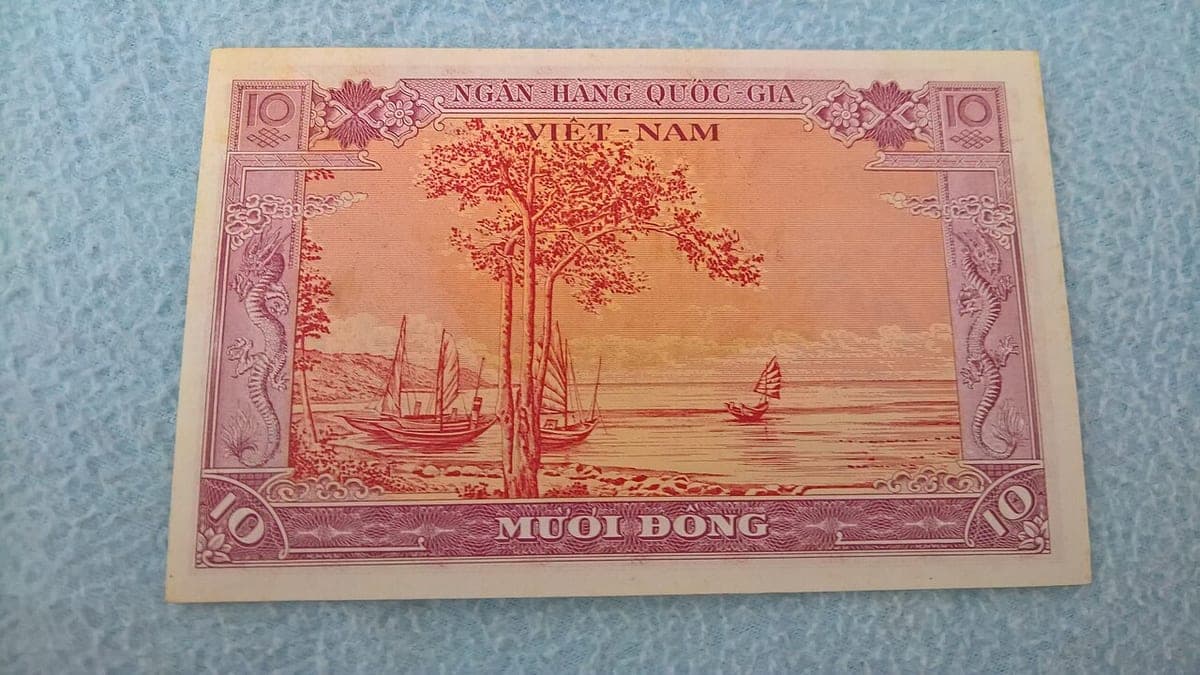
The dong uses polymer and paper notes from small denominations up to 500,000 VND—roughly 20 USD at typical 2026 rates, though rates move daily.
Common notes you will handle
| Note (VND) | Rough USD (verify live) | Typical use |
|---|---|---|
| 10,000 | ~$0.40 | Street snacks, small tips |
| 20,000 | ~$0.80 | Coffee, banh mi |
| 50,000 | ~$2 | Short Grab rides, market items |
| 100,000 | ~$4 | Sit-down lunch, museum entry |
| 200,000 | ~$8 | Dinner, scooter rental deposit |
| 500,000 | ~$20 | Hotel night (budget), large purchases |
Count zeros carefully when receiving change in busy markets—scammers exploit hurry at night markets and taxi curbs. Say amounts aloud when handing over 500,000 notes.
Mental math for travellers
For quick estimates: divide VND by 24,000–25,000 for USD, or multiply USD by 25,000 for dong planning. Example: 200,000 VND lunch ≈ $8 USD.
Use a notes app to log daily spends—humidity and jet lag make home-currency guessing drift fast on long trips.
What you cannot do
- VND is not freely convertible outside Vietnam—spend or exchange back before departure (airport rates are poor for sell-back).
- Coins exist but rarely matter in tourist transactions—notes dominate.
- Counterfeit risk is low at licensed banks; avoid shady street changers promising unrealistic rates.
Where to exchange money safely
Licensed banks (Vietcombank, BIDV, Agribank, Techcombank) and official exchange counters in Hanoi, Ho Chi Minh City, and Da Nang provide receipts and transparent rate boards.
Best places to exchange
| Location | Rate quality | Convenience | Notes |
|---|---|---|---|
| Licensed bank branch | Best | Moderate (queues) | Passport often required; receipt provided |
| Official exchange counter (tourist district) | Good | High | Compare 2–3 boards within a block |
| Hotel front desk | Poor–fair | High | Convenience premium 1–3% |
| Airport booth | Fair for small amounts | Highest on arrival | OK for starter stack only |
| Informal street desk | Risky | Variable | Avoid unless you understand risks |
Airport versus downtown
Airport booths suit a 500,000–2,000,000 VND starter stack for taxis, SIM cards, and first meals. Larger sums earn better downtown rates once you reach your hotel district.
Practical arrival flow:
- Land with small USD/EUR stack (optional)—$100–200 equivalent.
- ATM withdraw 2,000,000–3,000,000 VND at airport or first city stop if rates beat airport exchange.
- Exchange remaining USD at a licensed downtown bank when you need more.
USD, EUR, and other currencies
USD is the most widely accepted foreign cash for exchange. EUR and GBP work at major counters. Australian dollars, Japanese yen, and Korean won appear at tourist-district desks—rates vary. Crisp notes exchange easier than torn bills.
ATMs and daily limits
ATMs cluster in urban centres, tourist wards, shopping malls, and airport arrivals. Major bank ATMs (Vietcombank, BIDV, Agribank, Techcombank, VPBank) generally accept Visa and Mastercard debit cards.
What to expect at ATMs
- Local ATM fees: Often 20,000–50,000 VND per withdrawal at some machines—fee shown on screen before confirmation.
- Home bank fees: Foreign transaction and out-of-network charges on top.
- Per-withdrawal caps: Commonly 2,000,000–3,000,000 VND—plan multiple withdrawals or a bank visit for larger needs.
- Daily card limits: Set by your home bank—notify them before travel to reduce fraud blocks.
ATM strategy for travellers
- Notify your bank of Vietnam travel dates.
- Withdraw maximum allowed per transaction to minimise fee stacking.
- Use ATMs inside bank branches during business hours when possible—easier to resolve swallowed cards.
- Store card hotline numbers outside your wallet.
- Carry two cards from different networks (e.g., Visa + Mastercard).
Where ATMs disappear
Withdraw dong before remote routes:
- Ha Giang Loop and far northern passes
- Ba Be and remote national parks
- Con Dao and smaller islands (ATMs exist but queues and outages happen on holidays)
- Mountain homestays between major towns
For island-specific cash needs, see our Vietnam island travel guide and best islands guide.
Cards and mobile payments
Credit and debit cards
Visa and Mastercard work at:
- International hotels and upscale restaurants
- Airlines and major booking platforms
- Larger cafés in Hanoi, HCMC, Da Nang tourist cores
- Some supermarket chains (Big C, WinMart)
Cash still required for:
- Street food and market stalls
- Rural homestays and village meals
- Ferries, pier fees, and island shuttles
- Marine park gates and many tour operators
- Grab cash trips (though Grab accepts cards in cities)
- Motorbike rental deposits (often cash)
Dynamic currency conversion (DCC)
When a POS terminal offers charge in USD or home currency instead of VND—choose VND. DCC rarely favours travellers; your home bank's rate is usually better.
Domestic mobile wallets
MoMo, ZaloPay, and VNPay dominate local life but require Vietnamese bank accounts tourists typically lack. Short-term visitors rely on cash + one widely accepted card. QR payments at street stalls are uncommon without local wallet setup.
Tipping and service charges
Tipping is appreciation, not obligation—but tourism hubs increasingly expect modest gratuities.
| Situation | Norm in 2026 | Suggested range (VND) |
|---|---|---|
| Street food / cafés | Round up or leave small change | 5,000–20,000 |
| Taxis (Grab or meter) | Round to nearest 10,000 | 10,000–30,000 |
| Guided tours / boat crews | If pleased with service | 50,000–200,000 per day |
| Hotel housekeeping | Not required | 20,000–50,000 per night |
| Restaurants | Check bill first | 5–10% if no service charge |
| Spa / massage | Optional | 50,000–100,000 |
Check restaurant bills for included 5–10% service charge before tipping twice. Applause often suffices at community performances—cash tips are not expected.
Regional budget planning in VND
Prices fluctuate; treat figures as planning bands, not fixed contracts. Mid-range traveller, excluding hotels and long-haul flights:
| City / region | Meals + local transport/day | Notes |
|---|---|---|
| Hanoi / HCMC | 400,000–700,000 VND | Street food lowers costs dramatically |
| Hoi An / Da Nang | 500,000–800,000 VND | Bicycle rentals cheap; beach cafés moderate |
| Nha Trang resort strip | 700,000–1,200,000 VND | Resort dining pushes high; street food available |
| Island trips | 600,000–1,500,000 VND | Ferries, park fees, cash-heavy |
| Dive days | 1,500,000–3,500,000 VND | Includes two-tank trips—see diving guide |
| Ha Giang Loop | 500,000–900,000 VND | Cash only in remote stops—withdraw in Ha Giang town |
Beach and coast holidays
Mid-range beach travellers often spend 800,000–1,500,000 VND daily on meals, local transport, and modest activities—see the Vietnam beach holidays guide for coast-specific costs.
Sample trip cash plan (10-day central Vietnam)
| Need | Amount (VND) | When to have it |
|---|---|---|
| Arrival taxi + SIM | 500,000–800,000 | Airport ATM or small exchange |
| Daily spending (8 days) | 4,000,000–6,400,000 | ATM top-ups in Da Nang |
| Cham Island day trip buffer | 800,000–1,200,000 | Cash before pier |
| Emergency reserve | 2,000,000 | Separate pocket |
Cash-heavy scenarios: islands, diving, and ferries
Some Vietnam experiences are dong-first by necessity—plan cash before you reach the pier.
| Scenario | Typical cash needs (VND) | Card accepted? |
|---|---|---|
| Cat Ba / Got Pier ferry | 80,000–120,000 per leg | Rarely |
| Cham Islands speedboat + park fee | 400,000–1,000,000 day total | Tour desk sometimes |
| Phu Quoc night market seafood | 150,000–400,000 per meal | Some stalls no |
| Con Dao dive boat + park fee | 1,600,000–3,500,000 per day | Mixed |
| Ha Long cruise tip | 200,000–500,000 | Cash preferred |
| Motorbike deposit | 500,000–2,000,000 | Cash held |
Rule: Withdraw 2,000,000–5,000,000 VND on the mainland before island hops. Carry 50,000 and 100,000 notes for pier fees—500,000 notes are hard to change on boats.
Practical saving and security tips
- Split cash across pockets and hotel safe—don't carry everything to the beach.
- Photograph ATM receipts until home bank balances reconcile.
- Refuse redundant plastic bags at markets—mesh totes survive monsoon afternoons.
- Buy sunscreen and reef-safe lotion in city pharmacies—island and resort markups hurt.
- Compare tour prices in VND before USD-quoted resort desks—conversion spreads hide premiums.
- Use hotel safes for passport and excess cash; carry copies of eVisa approval PDF separately.
Common money mistakes in Vietnam
- Relying on cards at island piers—marine fees and snacks are cash-first.
- Exchanging entire budget at the airport—downtown banks beat spreads on large sums.
- Accepting DCC in USD at POS—choose VND settlement.
- Single ATM withdrawal per day—fees stack; withdraw the daily max.
- Forgetting to notify home bank—fraud blocks strand you without cash.
- Miscounting zeros on 500,000 notes in dark markets—say amounts aloud.
- Tipping twice when service charge already on bill.
- Booking non-refundable travel before eVisa approval—sort how to apply for a Vietnam eVisa online first.
Visa fees vs travel money (know the difference)
Government eVisa fee: Paid online during application on this site—amount set by authorities, not by private services. See Vietnam eVisa fees explained for current tier breakdown.
Private assistance fee: If you use our service, we charge a separate disclosed fee for application preparation and review—we are not the government and do not control approval outcomes.
Travel money is separate from visa fees—budget both before departure. Rejected applications (often photo or data errors) delay trips—review Vietnam eVisa photo requirements and common eVisa mistakes to avoid repaying government fees.
Booking logic: Confirm entry approval before non-refundable island resorts, dive packages, or domestic flights. Match your Vietnam eVisa entry port to your first landing airport.
Frequently asked questions
Should I bring USD cash or use ATMs in Vietnam?
Both. Small USD/EUR stack for arrival convenience; ATMs in cities for larger VND amounts at competitive effective rates. Licensed downtown exchange beats airport spreads on big conversions.
Do ATMs in Vietnam accept foreign debit cards?
Yes at major bank ATMs in tourist cities. Expect local fees (20,000–50,000 VND), home bank charges, and 2,000,000–3,000,000 VND caps per withdrawal.
Can I pay with credit cards everywhere in Vietnam?
No. Cards work at upscale hotels and larger restaurants; street food, ferries, markets, and park fees need cash. Carry VND and a backup card.
Is tipping expected in Vietnam in 2026?
Not mandatory, but 50,000–200,000 VND tips for guides and 20,000–50,000 VND for housekeeping are appreciated in tourism. Check for service charges on restaurant bills.
How much cash should I carry for island trips?
Plan 500,000–2,000,000 VND per day depending on activities. Marine park fees, ferries, and village meals rarely take cards—withdraw on the mainland first.
Can I pay the Vietnam eVisa fee in cash on arrival?
No. The official eVisa is paid online during application. Our private service charges separate disclosed assistance fees.
What is the easiest way to estimate prices in USD?
Divide VND by ~24,000–25,000 for a rough USD figure—verify live rates. A daily spend tracker app prevents drift.
Closing summary
Vietnam rewards a simple cash-plus-card strategy: land with a small foreign stack, ATM withdraw in cities at maximum per-transaction limits, exchange leftover USD at licensed banks, and carry dong in small notes before ferries, islands, and dive boats. Cards handle hotels and flights; cash handles everything that makes Vietnam travel vivid—street bowls, pier fees, and market mornings.
Sort entry formalities early so payment stress does not overlap with departure week. Verify eligibility, understand government vs assistance fees, apply before non-refundable bookings, and match your entry port to your arrival airport.
We are a private visa assistance service, not the Government of Vietnam.
Apply for your Vietnam eVisa once your budget and itinerary are set—or check your requirements while you plan how much dong to carry.
Ready to apply? Use our guided 4-step form on this site.
Apply for Vietnam eVisaRelated Articles
Vietnam eVisa for Children & Families (2026): Complete Group Application Guide
Complete 2026 guide to Vietnam eVisas for children, infants, and family groups—separate passport rules, group filing for up to 15 travelers, photos, fees, guardianship documents, immigration tips, and common family mistakes.
Vietnam Multiple Entry e-Visa 2026 - Ultimate 90-Day Guide
Vietnam multiple-entry eVisa 2026: when single entry fails, real travel plan examples, $55 vs $80 visa fees, how long visas stay valid, re-entry checks at the border, and mistakes that block your second crossing.
Why Vietnam eVisas Get Rejected in 2026: Top Reasons and How to Fix Them
Top Vietnam eVisa rejection reasons in 2026—document quality, passport data mismatches, eligibility issues, duplicate applications—and exactly what to fix before you reapply or fly.