Apply on vietnamemigration.com
Start your Vietnam eVisa here — visa type, travel dates, passenger details, secure payment, and document upload. No need to leave this site for another application page.
Vietnam is not a top-tier global dive destination on paper—but for travellers already visiting the country, three distinct hubs deliver worthwhile underwater time when you match season, certification level, and domestic flights to the right coast. Nha Trang trains beginners on Hon Mun reefs. Phu Quoc offers relaxed Gulf of Thailand fun dives. Con Dao rewards experienced divers with regulated marine park sites, turtles, and occasional reef shark encounters.
This guide compares dive sites, certification logistics, seasonal visibility, VND pricing, marine park fees, safety basics, and flying-after-diving rules—so you can plan scuba as part of a broader Vietnam trip without wasting days on cancelled boats or wrong-level sites.
We are a private visa assistance service—not the Government of Vietnam. Dive permits, marine park rules, and site access are set by Vietnamese authorities and licensed operators. We help travellers secure entry documents; the dive advice below is general travel guidance.
For island access, beach weeks, and Phu Quoc vs Con Dao comparisons, see our best islands in Vietnam guide. For coast route planning, see the Vietnam beach holidays guide.
Quick answer: Vietnam diving at a glance
| Hub | Best for | Typical visibility | Season window | Two-tank day (VND) | Access |
|---|---|---|---|---|---|
| Nha Trang + Hon Mun | Courses, refreshers, macro | 5–15 m (variable) | Feb–Oct best | 1,200,000–2,000,000 | Fly/train to Cam Ranh (CXR) |
| Phu Quoc (west/south) | Fun dives, turtles, resorts | 5–20 m (seasonal) | Year-round; clearest Nov–Apr | 1,200,000–2,500,000 | Fly SGN→PQC |
| Con Dao | Advanced sites, sharks, turtles | 10–25 m+ (when open) | Nov–Apr best | 1,500,000–3,000,000+ | Fly SGN→VCS (limited) |
Visa planning note: Diving requires no separate permit beyond valid entry to Vietnam. Secure your Vietnam eVisa before non-refundable dive packages—verify Vietnam visa eligibility by country and allow processing time per the Vietnam eVisa processing time guide.
How to choose your dive hub
Ask four questions before booking:
- What is your certification level? Open Water → Nha Trang or Phu Quoc. Advanced + experience → Con Dao becomes viable.
- How flexible is your schedule? Con Dao cancels offshore days when currents spike—build spare dive days.
- Are you learning or fun-diving? Courses need multi-day blocks without interleaved party cruises.
- Where are you flying from? Nha Trang pairs with central coast culture trips. Phu Quoc and Con Dao need southern flight hubs—usually Ho Chi Minh City (SGN).
| Your profile | First choice | Avoid |
|---|---|---|
| Open Water student | Nha Trang | Con Dao offshore pinnacles |
| Certified fun diver, 3–4 days | Nha Trang or Phu Quoc | Rushing Con Dao in two nights |
| Advanced, photography, sharks | Con Dao | Nha Trang in typhoon season |
| Resort guest wanting one try-dive | Phu Quoc Discover Scuba | Multi-day Con Dao expedition |
| Liveaboard-style ambition | Con Dao (land-based boats) | Expecting Maldives standards |
Nha Trang and Hon Mun Marine Protected Area
Central Vietnam's busiest dive coast stacks PADI and SSI centres along Tran Phu and the Cam Ranh peninsula. Hon Mun Marine Protected Area—a short boat ride from Nha Trang—anchors most day trips with snorkel-dense reefs, nudibranch macro, and coral fingers suitable for training.
Why Nha Trang suits beginners and courses
- Shallow training sites with pool-like conditions on good days.
- High shop density—competition keeps Open Water course prices reasonable.
- English-speaking instructors common on main strip operations.
- Easy topside logistics—airport, resorts, restaurants, and non-diving activities (mud baths, Cham towers).
Open Water course (typical): 8,000,000–12,000,000 VND including equipment and certification fees—verify what's included (manuals, park fees, extra dives).
Refresher / Discover Scuba: 1,500,000–3,000,000 VND for supervised shallow experiences.
Hon Mun dive sites and marine park rules
Hon Mun sites vary by day and operator routing. Expect:
- Coral garden slopes with butterflyfish, angelfish, and moray eels.
- Macro subjects—nudibranchs, shrimp, and pipefish on careful slow dives.
- Marine park fees often 50,000–150,000 VND paid cash on the pier—not always bundled in quoted prices.
Conservation rules: Fin-kick discipline matters—fragile coral heads recover slowly. Some sites restrict gloves and touching. Follow divemaster briefings; fines apply for marine park violations.
Nha Trang season and sea conditions
| Period | Conditions | Planning note |
|---|---|---|
| Feb–Oct | Best visibility window | Book morning boats; afternoon storms possible |
| Nov–Feb | Winter winds, chop | Boats cancel; have backup topside days |
| Sep–Dec | Typhoon track risk | Avoid non-refundable dive packages |
Winter November–February winds occasionally churn the bay—consult divemasters each morning before paying. Pair diving with Po Nagar Cham towers or Long Son Pagoda when boats cancel.
Ideal dive trip length: 3–5 nights in Nha Trang for a course or two days of fun diving plus buffer weather days.
Phu Quoc's western and southern reefs
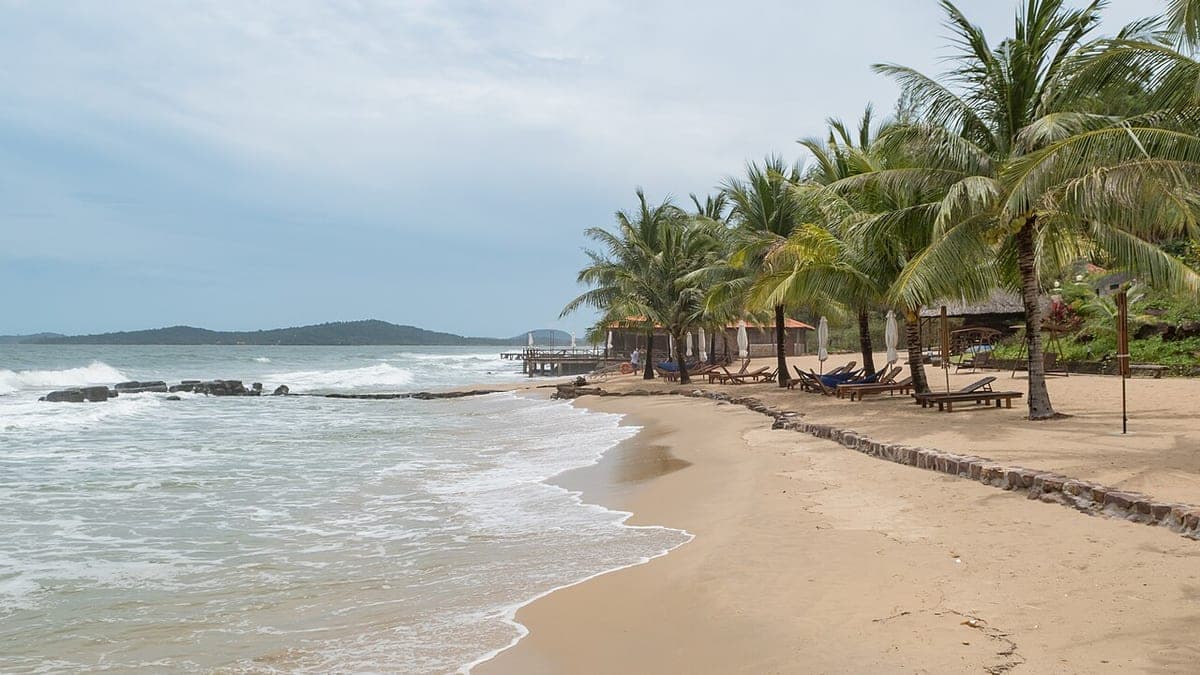
Phu Quoc sits in the Gulf of Thailand—warmer water, gentler profiles than Con Dao, and resort-friendly logistics. Day boats from Duong Dong and An Thoi reach western reefs and southern islets with turtle sightings and relaxed drifts for newer Advanced Open Water divers.
Phu Quoc diving character
- Visibility swings with plankton blooms—clearest often November–April.
- Resort integration—Discover Scuba tempts hotel guests; serious certifications deserve dedicated multi-day schedules.
- Night dives appear seasonally—torch discipline protects fish resting under ledges.
- Topsides pairing—dawn dives, Long Beach afternoons, Duong Dong Night Market evenings.
Two-tank fun dive (typical): 1,200,000–2,500,000 VND with rental gear. Nitrox, private guide, and park extras cost more—state desired oxygen percentage before signing waivers.
Phu Quoc logistics for divers
- Flights: SGN→PQC (≈1 hour) most reliable; seasonal Hanoi routes exist.
- Cash: Resort menus quote USD; pier snacks and tips are dong-first. See Vietnam currency exchange guide.
- Surface intervals: If diving multi-day then flying to Hanoi or Da Nang, observe 18–24 hour fly-after-diving buffers.
Ideal length: 4–7 nights—combine diving with beach time. Shorter trips waste airport hours.
Who it suits: Certified fun divers wanting easy southern logistics, turtle hopes, and resort comfort—not frontier current diving.
Con Dao National Park diving
Con Son island anchors Vietnam's southern marine frontier: deeper sites, cooler thermoclines, reef shark encounters where regulations allow, and turtle nesting beaches under national park protection. This is the strongest Vietnam dive destination for experienced divers—also the least forgiving for beginners and tight schedules.
Con Dao dive sites and conditions
Operators run park-compliant trips to sites around Hon Bay Canh and neighbouring islets:
- Offshore pinnacles with stronger currents—Advanced Open Water or documented experience expected.
- Visibility often 10–25 m+ when sites open—best November–April.
- Marine life: Reef sharks (species vary by season), turtles, barracuda, and healthy hard coral on protected sites.
- Cancellations: Currents and wind postpone offshore days without refund guarantees—build spare dive days.
Two-tank day (typical): 1,500,000–3,000,000+ VND—higher than Nha Trang due to park compliance, fuel, and limited operator competition.
Marine park fees and conservation protocols
- Park fees often 50,000–200,000 VND paid cash on piers—confirm inclusion in quotes.
- Turtle nesting beaches demand red-light protocols after dark during nesting season (often May–September)—no flash photography; follow ranger briefings.
- Rinse gear thoroughly—operators enforce invasive species prevention.
- Book licensed park-compliant operators only—unlicensed boats risk fines and site closures.
Con Dao access and scheduling
Con Dao Airport (VCS) receives limited flights from SGN (≈1 hour)—typically one to three daily services depending on season. From Hanoi: HAN→SGN→VCS with buffer nights in HCMC if connections are tight.
Typical mistake: Booking Con Dao and Phu Quoc back-to-back with one night between—flight fragility ruins dive schedules. Choose one southern dive hub per trip unless you have eight or more southern days.
For island context beyond diving, see the best islands in Vietnam guide.
Certification and training logistics
Open Water (beginner certification)
- Duration: 3–4 days typical in Nha Trang—pool/confined water plus four open-water dives.
- Requirements: Swim competency, medical questionnaire, minimum age (usually 10 for Junior OW, 15 for full OW).
- Book direct with dive shops—resort "free try dives" are marketing, not certification shortcuts.
- Logbook: Digital or paper—stamp every dive; assists future liveaboard paperwork abroad.
Advanced Open Water
- Duration: 2–3 days after Open Water.
- Value in Vietnam: Deep and navigation dives unlock Phu Quoc drifts and some Con Dao sites.
- Cost: 6,000,000–10,000,000 VND regionally—compare included dives and park fees.
Refreshers and specialty courses
- Refresher: Half-day to full-day if certified but rusty—1,500,000–3,000,000 VND.
- Nitrox: Useful for multi-dive days; verify shop fill standards and O₂ analyser use.
- Rescue / Divemaster: Longer commitments—confirm instructor continuity before paying deposits.
Training versus fun-diving scheduling
Do not stack Open Water course days with overnight party cruises or long bus transfers—fatigue and seasickness compound. Serious certifications deserve dedicated dive weeks with morning water time and afternoon theory/rest.
Equipment, insurance, and safety basics
What operators provide vs what to bring
| Item | Usually provided | Bring yourself |
|---|---|---|
| BCD, regulator, tanks | Yes (rental) | Own mask + snorkel if fussy about fit |
| Wetsuit (3 mm) | Yes | Rash guard for UV |
| Dive computer | Sometimes rental | Own computer if certified |
| Fins | Yes | Booties if you blister easily |
Verify regulator service dates and photograph tank valve stickers after fills—especially when crews rotate mid-trip.
Insurance
Carry DAN or equivalent dive insurance listing scuba explicitly. Standard travel policies often exclude depth limits or require add-ons. Emergency hyperbaric chambers exist in Vietnam but evacuation is costly without coverage.
In-water safety
- Surface conservatively—tropical sun dehydrates faster than tanks drain. Drink water between dives.
- Abort calmly if congested—forced equalisation causes barotrauma.
- No touch, no take—marine park rules and reef health depend on buoyancy control.
- Nitrox: State desired percentage; verify analyser reading before each dive.
- Keep physician contacts handy when reactive airways meet pier diesel exhaust.
Costs and budgeting in VND
| Item | Nha Trang | Phu Quoc | Con Dao |
|---|---|---|---|
| Two-tank fun dive + gear | 1,200,000–2,000,000 | 1,200,000–2,500,000 | 1,500,000–3,000,000+ |
| Open Water course | 8,000,000–12,000,000 | 9,000,000–13,000,000 | Rare—Nha Trang better |
| Nitrox fill (per tank) | 100,000–200,000 | 100,000–200,000 | 150,000–250,000 |
| Marine park fee | 50,000–150,000 | 50,000–150,000 | 50,000–200,000 |
| Pier snack / lunch | 50,000–100,000 | 50,000–100,000 | 80,000–150,000 |
Cash essential for park fees, tips, and pier extras. Withdraw dong in HCMC or Nha Trang before Con Dao—island ATM queues spike on weekends.
Flying after diving and domestic connections
Cabin pressure changes affect residual nitrogen. Standard guidance:
- Single no-deco dive: Minimum 12 hours before flying (conservative planners prefer 18).
- Multiple dives / multi-day: 18–24 hours surface interval before domestic flights.
- Conservative profiles: Log depth and time honestly; headaches at altitude signal insufficient off-gassing.
Domestic routes divers use:
- CXR (Cam Ranh) ↔ Hanoi/HCMC after Nha Trang diving
- PQC (Phu Quoc) ↔ SGN/HAN after Gulf dives
- VCS (Con Dao) ↔ SGN only—limited frequency makes 24-hour buffers wise after heavy dive schedules
Secure a visa covering your full dive window before non-refundable boat deposits. If extending stays, review Vietnam eVisa extension guide—extensions are separate from initial approval.
Common diving mistakes in Vietnam
- Booking Con Dao for Open Water training—sites and currents suit experienced divers; learn in Nha Trang.
- Non-refundable packages in Nha Trang typhoon season (Sep–Dec)—boats cancel for days.
- Flying SGN 12 hours after three-tank day—risk decompression symptoms.
- Assuming park fees are included—confirm quotes; carry cash.
- Kicking coral on Hon Mun—damages reefs and risks fines.
- Skipping dive insurance—evacuation costs dwarf course savings.
- One-night Con Dao dive trip—flight delays erase dive days; allow three to five nights.
Visa and entry planning for dive travellers
Diving requires standard tourist entry—no separate scuba visa. Practical steps:
- Verify eligibility — Vietnam visa eligibility by country
- Match entry port — SGN for southern dive hubs; CXR/DAD for Nha Trang with central coast entry
- Apply early — how to apply for a Vietnam eVisa online
- Check fees — Vietnam eVisa fees explained
- Multiple entry if exiting to Cambodia between dive legs — Vietnam multiple-entry eVisa guide
Private assistance note: We help travellers avoid application errors that delay dive trip starts; approval rests with immigration authorities.
Frequently asked questions
Where is the best diving in Vietnam for beginners?
Nha Trang and Hon Mun—shallow reefs, many training centres, and forgiving logistics. Phu Quoc works for certified divers wanting gentle fun dives—not primary training ground.
How much do scuba day trips cost in Vietnam?
Two-tank fun dives with gear commonly run 1,200,000–2,500,000 VND in Nha Trang and Phu Quoc. Con Dao prices higher. Add park fees, nitrox, and tips in cash.
When is diving season in Vietnam?
Nha Trang: February–October best; winter winds cancel boats Nov–Feb. Phu Quoc: Year-round with variable clarity; Nov–Apr often clearest. Con Dao: November–April with flexible spare days for current cancellations.
Can I fly after diving in Vietnam?
Allow 18–24 hours after multiple dives before domestic flights. Con Dao's limited schedules make conservative intervals especially important.
Is Con Dao better than Nha Trang for diving?
For experienced divers seeking visibility, marine life, and park sites—yes, when conditions cooperate. For training, budget, and reliability—Nha Trang wins. Beginners should not start in Con Dao.
Do I need certification to dive in Vietnam?
Fun dives require Open Water or equivalent. Discover Scuba experiences suit uncertified divers only under direct instructor supervision on shallow sites.
What marine park fees apply?
Hon Mun and Con Dao sites often charge 50,000–200,000 VND in cash on piers. Confirm whether operator quotes include fees.
Closing summary
Vietnam diving rewards realistic expectations and hub-matched planning. Nha Trang trains beginners and delivers reliable fun dives on Hon Mun reefs. Phu Quoc pairs Gulf dives with resort beach weeks. Con Dao trades convenience for marine park quality—worth it only with Advanced certification, spare days, and flexible flights.
Log conservative profiles, carry dive insurance, budget park fees in cash, and observe fly-after-diving intervals before domestic hops. Confirm your Vietnam eVisa before non-refundable dive deposits—apply early and match your entry port to your arrival airport.
We are a private visa assistance service, not the Government of Vietnam.
Apply for your Vietnam eVisa before locking dive dates—or check your requirements if you are building a dive-and-beach itinerary.
Ready to apply? Use our guided 4-step form on this site.
Apply for Vietnam eVisaRelated Articles
Vietnam eVisa for Children & Families (2026): Complete Group Application Guide
Complete 2026 guide to Vietnam eVisas for children, infants, and family groups—separate passport rules, group filing for up to 15 travelers, photos, fees, guardianship documents, immigration tips, and common family mistakes.
Vietnam Multiple Entry e-Visa 2026 - Ultimate 90-Day Guide
Vietnam multiple-entry eVisa 2026: when single entry fails, real travel plan examples, $55 vs $80 visa fees, how long visas stay valid, re-entry checks at the border, and mistakes that block your second crossing.
Why Vietnam eVisas Get Rejected in 2026: Top Reasons and How to Fix Them
Top Vietnam eVisa rejection reasons in 2026—document quality, passport data mismatches, eligibility issues, duplicate applications—and exactly what to fix before you reapply or fly.