Apply on vietnamemigration.com
Start your Vietnam eVisa here — visa type, travel dates, passenger details, secure payment, and document upload. No need to leave this site for another application page.
Vietnam's timeline stacks Cham kingdoms, imperial Nguyen courts, French colonial boulevards, and 20th-century struggle into places you can still walk through—not only read about. From Hue's citadel to Hoi An's lantern lanes, My Son's brick towers, and Cu Chi's tunnels, history here is tactile: stone under your sandals, timber creaking in merchant houses, and museum halls that demand quiet attention.
This 2026 historical Vietnam travel guide ranks the ten sites worth prioritising, explains how many days each needs, what tickets cost in VND, how to sequence north–central–south routes, and what first-time visitors get wrong. Most ticket desks quote dong; carry cash in small notes for guides, bicycle hire, and iced coffee between temples.
We are a private visa assistance service—not the Government of Vietnam. Check eVisa requirements for your nationality and apply online before you lock non-refundable flights—processing is often within a few working days but varies by volume.
Quick answer: top historical places in Vietnam at a glance
| Site | Region | Days needed | Ticket range (VND) | Best season | Priority level |
|---|---|---|---|---|---|
| Hue Imperial City & tombs | Central | 1.5–2 | 200,000–500,000 bundled | Feb–Apr | Essential |
| Hoi An Ancient Town | Central | 1–2 | 120,000+ heritage booklet | Feb–May, Sep–Nov | Essential |
| My Son Sanctuary | Central | Half day | 150,000 | Feb–May | High |
| Hanoi Old Quarter & Hoan Kiem | North | 1–2 | Mostly free stroll; museums <50,000 | Oct–Apr | Essential |
| Thang Long Citadel | North | 2–3 hrs | 30,000–50,000 | Oct–Apr | High |
| Cu Chi Tunnels | South | Half day | 100,000–150,000 | Nov–Apr | High (war history) |
| Independence Palace | South | 2–3 hrs | 40,000–65,000 | Year-round | High |
| Ho Dynasty Citadel | North-Central | 2–3 hrs | 40,000 | Oct–Apr | Niche |
| Ninh Binh (Hoa Lu, Trang An) | North | 1–2 | 100,000–250,000 | Oct–Apr | High |
| Con Dao prisons | South (island) | Half–1 day | 30,000–60,000 | Nov–Apr | Niche (solemn) |
Best for: History-first travellers, repeat Southeast Asia visitors, photographers, and anyone building culture around food and festivals.
Ideal trip length: 10–12 days full north–central–south; 7–8 days Hanoi–Hue–Hoi An focused loop.
Budget level: Site tickets 50,000–200,000 VND each; guides 300,000–600,000 VND half-day; mid-range hotels 800,000–1,500,000 VND nightly in heritage towns.
Visa planning note: Match your first landing airport (HAN, DAD, or SGN) to your Vietnam eVisa entry port. Apply via how to apply for a Vietnam eVisa online before non-refundable heritage tours.
How to choose which historical sites fit your trip
Not every site rewards every traveller. Use this decision filter:
| If you want… | Prioritise | Deprioritise |
|---|---|---|
| Imperial courts and tombs | Hue | Cu Chi |
| Walkable merchant architecture | Hoi An | Ho Dynasty Citadel |
| Cham Hindu heritage | My Son | Independence Palace |
| War and 20th-century narrative | Cu Chi, Independence Palace, War Remnants | Hoi An lanterns |
| Ancient capitals pre-Nguyen | Thang Long, Hoa Lu | Beach add-ons |
| Solemn prison memorial | Con Dao | Nightlife districts |
| Off-path UNESCO quiet | Ho Dynasty Citadel | My Son midday tour buses |
One-week rule: Choose north + central OR central + south—not all three unless you accept transit-heavy days.
1. Hue Imperial City and royal tombs
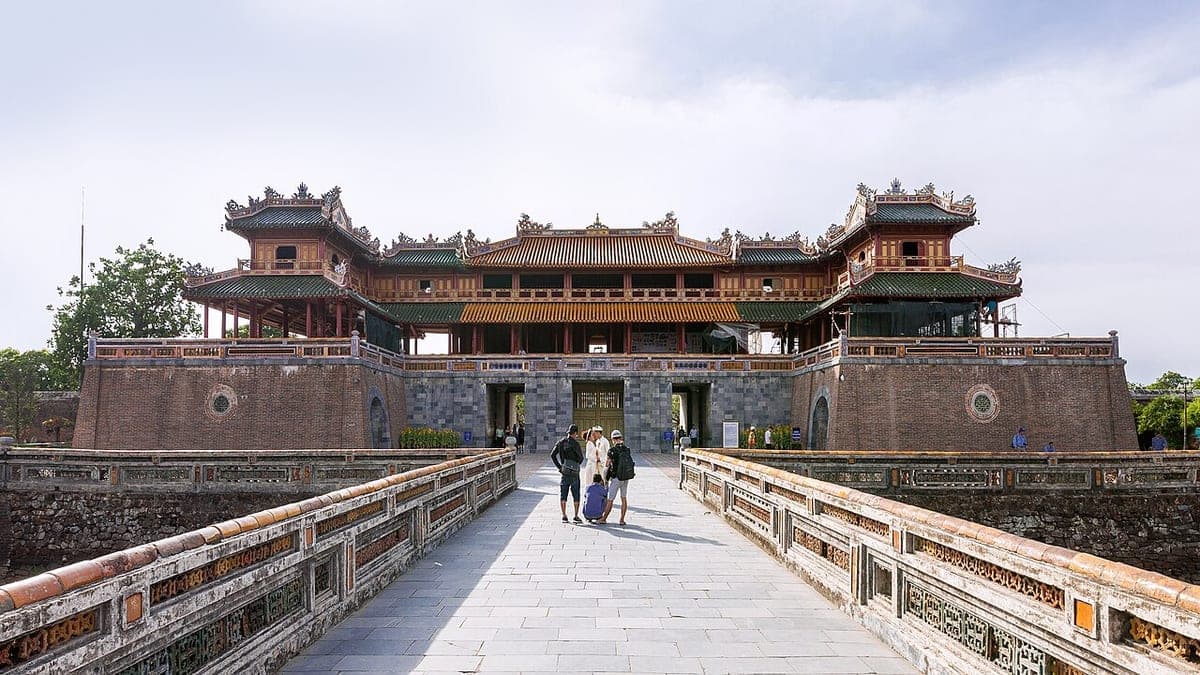
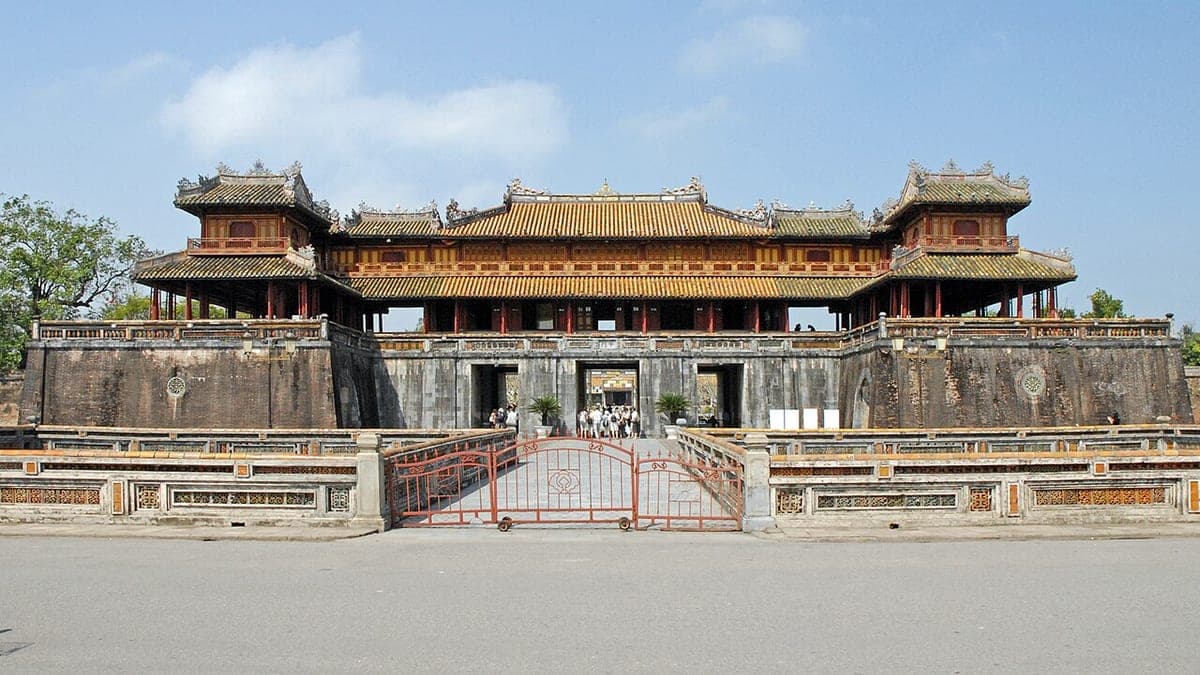
Hue was Vietnam's imperial capital under the Nguyen dynasty (1802–1945). The Imperial City (Dai Noi) sits inside a square citadel with moats, nine holy cannons, and gates named for cardinal virtues. Throne halls, mandarin pavilions, and restored galleries explain court ritual; fire damage from 1968 remains visible in places, which makes today's rebuilding more poignant.
What to see inside the Citadel
- Ngo Mon (Meridian Gate)—iconic triple gate and photo benchmark
- Thai Hoa Palace—throne hall and imperial yellow roof tiles
- Forbidden Purple City—partially restored inner court
- The Mieu and Hung Mieu temples—ancestral worship architecture
Royal tombs along the Perfume River
Do not skip the royal tombs—they are as essential as the citadel.
| Tomb | Character | Time | Photo note |
|---|---|---|---|
| Khai Dinh | European masonry meets Vietnamese iconography; grey atmospheric climb | 1–1.5 hrs | Dramatic stairs |
| Tu Duc | Sprawling lakes, pavilions, poetry inscriptions | 1.5–2 hrs | Pine-shaded paths |
| Minh Mang | Symmetrical geomantic layout | 1–1.5 hrs | Dawn favoured |
Boat vs scooter: Perfume River boats link tombs scenically; scooters suit tight schedules. Combined tickets often bundle zones—ask what your pass covers at the gate.
Planning: Allow one full day for the citadel and half a day for two tombs. Licensed guides run 300,000–600,000 VND for half-day context on poetry, rank badges, and restoration debates.
Hue mistakes: Visiting only the citadel; arriving at midday without shade plan; skipping nha nhac court music when scheduled.
Pair evenings with Vietnamese music, arts, and culture and Vietnamese festivals if your dates align with imperial events.
2. Hoi An Ancient Town
Hoi An froze in time when the Thu Bon River silted and trade shifted to Da Nang. Today's UNESCO core is a grid of mustard-yellow shophouses, assembly halls (Fujian, Cantonese, Hainan), and a wooden Japanese Covered Bridge with its guardian temple.
Tickets and access
Buy a heritage ticket booklet for controlled entries to old homes and museums; strolling public lanes at night is free but crowded. Booklet prices change—verify at official booths, not random street sellers.
Day vs night strategy
| Time | Experience | Tips |
|---|---|---|
| Morning (07:00–10:00) | Tailor fittings, market colour, fewer tour groups | Heritage houses open |
| Midday | Heat and crowds peak | Museum interiors, café break |
| Evening | Lanterns, riverfront photography | Full-moon nights busiest |
Rent a bicycle (50,000–100,000 VND per day) to reach Tra Que vegetable village or An Bang beach.
Tip: Motor vehicles are restricted in the old core during peak hours—stay inside or just outside the pedestrian zone to avoid long walks with luggage.
Hoi An mistakes: One-hour whistle-stop en route to Da Nang; buying lanterns only on riverfront without exploring assembly halls; skipping My Son because "old town is enough."
3. My Son Sanctuary
Two hours from Hoi An, My Son was the spiritual heart of the Champa civilisation. Brick towers from the 7th–13th centuries stand in jungle clearings; early-morning visits beat tour-bus heat and harsh midday light.
Guides explain Shiva worship, brick firing without mortar, and restoration after 1969 bombing. Wear grippy shoes; paths are flat but rooty. Modest dress respects active Cham cultural continuity nearby.
Planning: Half day from Hoi An (depart 06:30–07:00). Tickets roughly 150,000 VND. Combine with Hoi An evening to contrast sacred Cham brick with merchant Chinese timber.
Season note: Central September–November storms can close sites—pad buffer days. See best islands and central coast planning for overlapping weather logic.
4. Hanoi Old Quarter and Hoan Kiem Lake
Hanoi's Old Quarter grew from 36 guild streets—each lane once specialised (silk, silver, tin, paper). Today the grid mixes street-food smoke, scooter rhythm, and Ma May heritage house museums. Circle Hoan Kiem Lake for Ngoc Son temple, weekend pedestrian zones, and dawn tai chi.
Key stops
- St Joseph's Cathedral (neo-Gothic)—best exterior photos when scaffolding permits
- Dong Xuan market fringes for atmosphere, not polished souvenirs
- Bach Ma Temple—one of the oldest spiritual anchors
- Egg coffee (ca phe trung) on a balcony over tile roofs
History here is urban and layered—French façades beside tube-house economics still run on family labour. Food context in Vietnamese food by region.
Budget: Street meals 40,000–80,000 VND; many museum entries under 50,000 VND.
Hanoi mistakes: Treating the Old Quarter as nightlife only; skipping Thang Long Citadel because it is less photogenic than the lake.
5. Thang Long Imperial Citadel, Hanoi
Distinct from the Old Quarter's commerce, Thang Long Citadel documents a thousand years of capital status—Ly, Tran, Le, and Nguyen layers in archaeology. The Flag Tower is a city landmark; underground exhibits show foundations, wells, and ceramic shards with bilingual explanations.
Allow 2–3 hours for exhibits and ramparts. Combine with the Ho Chi Minh Mausoleum complex nearby (strict dress code, bag rules, morning-only viewing windows) for a full day of pre-colonial and 20th-century narrative.
Monday closure: Citadel areas sometimes rest—verify weekly schedule before routing.
6. Cu Chi Tunnels, near Ho Chi Minh City
The Cu Chi tunnel network illustrates guerrilla logistics: ventilation disguised as termite mounds, hidden kitchens, and booby-trapped routes. Visitors enter widened sections—skip crawling if claustrophobic; above-ground displays of traps and ordnance still land emotionally.
Ben Duoc vs Ben Dinh
| Site | Character | Crowds |
|---|---|---|
| Ben Duoc | Larger, memorial temple, more authentic scale | Moderate |
| Ben Dinh | Closer to Saigon, more tour buses | Higher |
Pair a morning tour with the War Remnants Museum in Saigon for 20th-century context. Audio guides help; human guides connect tunnel life to wider war history.
Cost: Tickets often 100,000–150,000 VND plus transport (200,000–400,000 VND tour from District 1). Optional shooting-range add-ons are controversial—many travellers skip them.
Cu Chi mistakes: Midday heat without water; assuming all tours include Ben Duoc when booked to Ben Dinh; treating tunnels as adventure park without museum time.
7. Independence Palace and colonial Saigon core
Independence Palace (Reunification Palace) preserves 1960s briefing rooms, war maps, and the rooftop helipad moment of 30 April 1975. Interiors are time-capsule modernist—formica, radios, and private quarters revealing how leadership lived while war escalated.
Walk outward to Notre-Dame Basilica (restoration scaffolding may wrap the façade) and Central Post Office—Gustave Eiffel's engineering circle touches Vietnam here. Evening Nguyen Hue walking street adds contemporary energy after history-heavy afternoons.
Tickets: 40,000–65,000 VND; allow 2–3 hours including basement command rooms.
8. Citadel of the Ho Dynasty, Thanh Hoa
Off the main tourist highway, the Ho Dynasty citadel (built 1397) is a rare laterite stone rectangle assembled without mortar—UNESCO quiet compared with Hue. Four gates align to compass points; inner platforms hint at vanished palaces. Military-architecture fans appreciate the mass; casual visitors enjoy grassy quiet.
Getting there: 3.5–4 hours south of Hanoi by road—best as a stopover if driving to Phong Nha or flying south, not as a dedicated day trip unless you love fortress geometry.
Combine with Sam Son beach 45 km away for a coast add-on. Fewer English guides—download offline notes beforehand.
Who should skip: Travellers with only one week and no central Vietnam plans—Hue delivers richer imperial narrative for most visitors.
9. Ninh Binh: Hoa Lu, Trang An, and Bai Dinh
Ninh Binh condenses history into karst backdrops. Hoa Lu was capital in the 10th–11th centuries—temples to Dinh and Le rulers sit among rice fields. Trang An boat routes wind through flooded valleys to caves once used as hideouts; rowers time 2–3 hour loops. Bai Dinh pagoda complex is vast and contemporary—impressive scale, different tone from ancient Hoa Lu.
Climb Hang Mua for dragon-ridge views if fitness allows (100,000–150,000 VND typical). Stay overnight in Tam Coc to beat day-trip convoys from Hanoi (about 2 hours by road).
Ninh Binh mistakes: Day-trip only from Hanoi without boat timing; skipping Hoa Lu because Bai Dinh billboards dominate highway signage.
10. Con Dao prisons and island heritage
Con Dao balances painful history with pristine coasts. French-colonial Phu Hai and Phu Son prisons held political detainees through much of the 20th century; exhibits document hunger strikes and independence activists with restraint. A walk to Hang Duong Cemetery completes the arc from incarceration to memorial.
Ferries from Soc Trang or flights from Ho Chi Minh City dictate schedules—book ahead in peak season. Budget one sober morning for history before beach afternoons.
Con Dao mistakes: Treating prisons as quick photo stops; disrespectful poses; insufficient flight buffer (limited seats).
Building a history-focused itinerary
12-day north–central–south sample
| Days | Base | Focus |
|---|---|---|
| 1–2 | Hanoi | Old Quarter, Thang Long Citadel, Ho Chi Minh complex |
| 3 | Ninh Binh | Hoa Lu, Trang An boat, Hang Mua |
| 4–5 | Hue | Imperial City, two tombs, Perfume River |
| 6–7 | Hoi An | Ancient town, My Son morning |
| 8–9 | Ho Chi Minh City | Independence Palace, War Remnants, colonial walk |
| 10 | Cu Chi half-day | Tunnels + return |
| 11–12 | Buffer / Con Dao optional | Weather or flight flexibility |
Regional summary table
| Region | Days | What to cover |
|---|---|---|
| North | 4–5 | Thang Long Citadel, Hanoi Old Quarter, Hoan Kiem; Ninh Binh day or overnight |
| Central | 4–5 | Hue Imperial City & tombs; Hoi An; My Son |
| South | 2–3 | Independence Palace, War Remnants area; Cu Chi half-day |
| Add-on | 2–3 | Con Dao prisons & memorials |
Open-jaw flights (Hanoi in, Ho Chi Minh City out) save backtracking. Overnight trains (Hue–Hanoi) add nostalgia but cost a sightseeing day—fly HAN–HUI or HAN–DAD if under ten days.
Verify Monday closures—some museums rest midweek.
Ticket and cost planning (VND)
| Site / service | Typical cost (VND) | Cash note |
|---|---|---|
| Hue Citadel + tombs bundle | 200,000–500,000 | Gate cash common |
| Hoi An heritage booklet | 120,000+ | Official booths only |
| My Son Sanctuary | ~150,000 | On site |
| Thang Long Citadel | 30,000–50,000 | Small notes |
| Independence Palace | 40,000–65,000 | Cards sometimes |
| Cu Chi Tunnels | 100,000–150,000 | Plus tour transport |
| Licensed half-day guide | 300,000–600,000 | Tip optional |
| Bicycle hire Hoi An | 50,000–100,000/day | Deposit common |
Prices change—verify at gates. Read Vietnam currency exchange guide for ATM strategy before rural day trips.
Common mistakes history travellers make
- Trying all ten sites in seven days—quality collapses into transit.
- Hue citadel without tombs—half the imperial story missing.
- My Son at noon—heat and tour-bus crush.
- Cu Chi only below ground—museum context matters.
- Ignoring Monday museum closures—check weekly rest days.
- eVisa port mismatch with DAD or HAN arrival—read Vietnam eVisa common mistakes.
- Con Dao as day trip—flights make same-day unrealistic.
- Disrespectful photography at prisons and temples—follow posted rules.
Visa and entry planning for history travellers
Historical sites are domestic destinations once you enter Vietnam legally. Your approved Vietnam eVisa (or other valid document) governs international arrival at an authorized port.
Official policy reminder: Entry rules are set by Vietnamese immigration authorities. Verify Vietnam eVisa requirements guide for your nationality before paying for non-refundable heritage tours.
Practical steps:
- Confirm approved entry ports match your flight route (HAN, DAD, SGN are typical for history loops).
- Read photo and document rules to avoid delays.
- Apply early—Vietnam eVisa processing time varies by season.
- Families: Vietnam eVisa for families and minors.
- Fees: Vietnam eVisa fees explained.
- Long stays: Vietnam eVisa extension guide.
- Multiple entry for Cambodia/Thailand side trips: Vietnam multiple-entry eVisa guide.
- Compare Vietnam eVisa vs embassy visa if your case is unusual.
Private assistance note: We help travellers avoid application errors—we are not the government. Final approval rests with immigration authorities.
Frequently asked questions
How many days do you need for historical sites in Vietnam?
Plan 10–12 days for north, centre, and south; 7–8 days for a tighter Hanoi–Hue–Hoi An loop. Add 2–3 days for Con Dao or extra Ninh Binh nights.
What is the best time to visit historical places in Vietnam?
October–April suits the north and centre. Central coast shoulders (February–May, September–November) work before peak storms. Avoid scheduling My Son and Hoi An without weather buffer September–November.
Do I need a Vietnam eVisa to visit historical sites?
Most foreign visitors need advance authorization before flying. Sites are domestic once you enter legally. Confirm on check requirement and match your entry airport on the form.
How much do historical site tickets cost?
Many sites are 50,000–200,000 VND; Hue and Hoi An bundles cost more. Carry cash and verify at the gate.
Which site should I prioritise with one week?
Hanoi + Hue + Hoi An delivers the strongest imperial and merchant contrast. Fly between regions to save time.
Is Hue or Hoi An better for history?
Hue for imperial courts and tombs; Hoi An for merchant architecture and walkable old-town texture. Visit both if possible.
Can I visit Cu Chi Tunnels with claustrophobia?
Yes—widened sections are optional; above-ground exhibits deliver context without crawling.
Are historical sites wheelchair accessible?
Accessibility varies. Contact venues ahead; Hoi An lanes and Cu Chi crawl sections are challenging.
Closing summary
Vietnam's top historical places reward sequencing, not checklist rushing—imperial Hue, merchant Hoi An, Cham My Son, thousand-year Hanoi layers, and Saigon's 20th-century turning points each need time and appropriate season. Open-jaw flights, early starts, and VND cash at gates keep the route smooth.
When your historical route and dates are set, verify eligibility, choose the correct entry type, confirm your port of entry, and apply early enough to absorb processing time.
Apply for your Vietnam eVisa before locking non-refundable tours—or check your requirements while building the timeline.
Related travel guides
Ready to apply? Use our guided 4-step form on this site.
Apply for Vietnam eVisaRelated Articles
Vietnam eVisa for Children & Families (2026): Complete Group Application Guide
Complete 2026 guide to Vietnam eVisas for children, infants, and family groups—separate passport rules, group filing for up to 15 travelers, photos, fees, guardianship documents, immigration tips, and common family mistakes.
Vietnam Multiple Entry e-Visa 2026 - Ultimate 90-Day Guide
Vietnam multiple-entry eVisa 2026: when single entry fails, real travel plan examples, $55 vs $80 visa fees, how long visas stay valid, re-entry checks at the border, and mistakes that block your second crossing.
Why Vietnam eVisas Get Rejected in 2026: Top Reasons and How to Fix Them
Top Vietnam eVisa rejection reasons in 2026—document quality, passport data mismatches, eligibility issues, duplicate applications—and exactly what to fix before you reapply or fly.