Apply on vietnamemigration.com
Start your Vietnam eVisa here — visa type, travel dates, passenger details, secure payment, and document upload. No need to leave this site for another application page.
If you are building a Vietnam nature itinerary and need to choose which national parks deserve your nights—not just a checkbox on a map—this guide compares the country's strongest protected areas by region, access, season, and budget. Vietnam's park system spans limestone cave kingdoms in Quang Binh, lowland rainforest within reach of Ho Chi Minh City, central ridge forests above Hue, freshwater lakes in the northeast, and marine reserves off Con Dao. Each cluster demands different transport, permits, and trip lengths.
We are a private visa assistance service—not the Government of Vietnam. Park fees, ranger rules, and marine regulations are set by Vietnamese authorities and park management. We help travellers prepare entry documents; the planning advice below is general travel guidance based on common 2026 routes and costs quoted in Vietnamese dong (VND).
For species-focused viewing—gibbons at dawn, turtle walks, ethical wildlife habits—see our companion guide on Vietnam wildlife and nature encounters. This article focuses on park logistics, regional comparisons, and route planning.
Quick answer: Vietnam national parks at a glance
| Park | Best for | Ideal length | Best season | Budget (mid-range/day) | Main gateway |
|---|---|---|---|---|---|
| Phong Nha–Ke Bang | Caves, karst forest, expedition caving | 2–4 nights | Mar–May, Sep (check floods) | 800,000–2,500,000 VND | Dong Hoi (VDH) or train |
| Cat Tien | Rainforest trails, weekend nature from HCMC | 2–3 nights | Nov–Apr (drier lowlands) | 700,000–1,800,000 VND | Ho Chi Minh City (SGN) |
| Cuc Phuong | Old-growth forest, primate centre, day hikes | 1–2 nights | Year-round; butterflies Apr–May | 500,000–1,200,000 VND | Ninh Binh or Hanoi |
| Bach Ma | Cool ridge walks, waterfalls near Hue | 1–2 days | Oct–Apr | 600,000–1,400,000 VND | Hue or Da Nang |
| Ba Be | Lake boating, Tay/Dao villages, slow travel | 2–3 nights | Mar–May, Sep–Nov | 600,000–1,300,000 VND | Hanoi + road transfer |
| Con Dao | Marine park, diving, turtle nesting beaches | 3–5 nights | Nov–Apr | 1,200,000–3,000,000 VND | Ho Chi Minh City flights |
Visa planning note: All parks lie inside Vietnam. Verify Vietnam visa eligibility by country and confirm your Vietnam eVisa entry port matches your first international landing—typically Noi Bai (HAN), Tan Son Nhat (SGN), or Da Nang (DAD)—before booking non-refundable park lodges or domestic flights.
How Vietnam's national parks differ by region
Vietnam stretches more than 1,600 km north to south. Park character, weather, and access change sharply by latitude—choosing wrong is the most common planning mistake.
- North (Ba Be, Cuc Phuong): Freshwater lakes and mature lowland forest within a day's drive of Hanoi. Cooler winters; winding mountain roads need buffer hours. Ideal for travellers who want nature without flying south.
- Central (Phong Nha, Bach Ma): Limestone karst and Annamite ridge forest anchor north–south overland routes. Flood season hits cave rivers hardest September through November. Pair with Hue, Da Nang, or Hoi An on classic coast itineraries.
- South (Cat Tien, Con Dao): Lowland rainforest near Ho Chi Minh City and marine reserves requiring flights or long ferries. Drier windows often run November through April in the lowlands; Con Dao seas calmest in the same broad window.
Decision rule: Pick parks that sit on your geographic line—not every park in one trip unless you have three weeks and accept domestic flights.
Phong Nha–Ke Bang: caves and primary forest
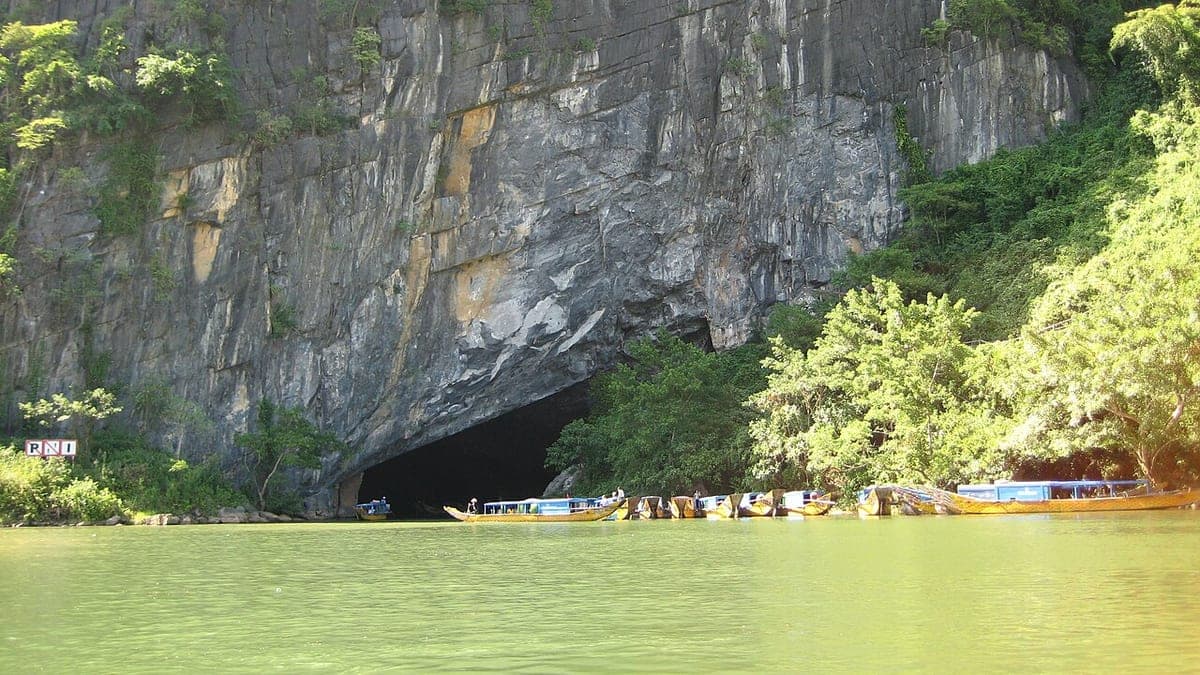
Phong Nha–Ke Bang in Quang Binh province is Vietnam's flagship cave national park—UNESCO-listed karst, underground rivers, and primary forest that anchors most central adventure weeks.
What to do inside the park
| Experience | Fitness level | Typical cost (VND) | Booking note |
|---|---|---|---|
| Paradise Cave boardwalk | Easy; families | 150,000–300,000 entry | On-site tickets; busy holidays |
| Phong Nha Cave boat trip | Easy | 150,000–250,000 + boat | River level dependent |
| Dark Cave zipline and mud swim | Moderate | Tour packages vary | Book licensed operators |
| Tu Lan 1-day swim-through | Moderate; water comfort | 2,000,000–4,000,000+ | Seasonal; flood checks essential |
| Tu Lan multi-day expedition | Strong fitness | 8,000,000–20,000,000+ | Licensed ops only; lead times |
| Son Doong expedition | Elite screening | Tens of millions VND | Months-ahead booking |
September through November brings flood advisories on central rivers—confirm water levels before Tu Lan swims or multi-day cave commitments. Operators post daily go/no-go calls; deposits may be non-refundable.
Getting to Phong Nha
- Fly or train to Dong Hoi (VDH): VDH has limited international connections; most travellers connect via Hanoi or Da Nang domestic flights, or overnight trains.
- From Hue or Da Nang: Roughly 4–5 hours by road—works as a north–south stop.
- Town base: Phong Nha village hosts guesthouses, tour offices, and restaurants; stay two to four nights minimum.
Who Phong Nha suits—and realistic pros/cons
Best for: Cave enthusiasts, photographers, moderate-to-advanced trekkers, travellers on Hanoi–Hue–Hoi An overland routes.
Pros: World-class cave scale at accessible and expedition tiers; strong operator ecosystem; pairs with DMZ history sites nearby.
Cons: Flood season disrupts river caves; show caves crowd on domestic holidays; remote feel—limited ATMs, cash-first village economy.
Typical mistake: Booking Tu Lan during peak flood weeks without flexible dates, or attempting a one-night stop that barely covers one cave.
Cat Tien National Park: rainforest within reach of Ho Chi Minh City
Cat Tien protects one of Vietnam's largest remaining lowland rainforest tracts—roughly 150 km northeast of Ho Chi Minh City, practical for weekend nature breaks.
Park structure and activities
- Fauna Recovery Centre and gibbon rehabilitation areas (viewing rules vary—follow ranger signage).
- Botanical gardens and marked forest trails from park headquarters.
- Crocodile Lake stakeouts on guided routes.
- Night safaris by jeep when rangers permit—spotlight etiquette applies.
Lodges near the park gate run roughly 800,000–2,000,000 VND per night depending on fan versus air-conditioning. Staying inside or adjacent to the gate cuts dawn drive time—critical for wildlife-active mornings.
Season and access
November through April often dries lowland trails and concentrates animals near waterholes. Summer brings heat and mosquitoes; repellent and long sleeves matter year-round. Hire park-approved guides for restricted routes—unlicensed trail cutting damages habitat and risks fines.
Who it suits: Saigon-based travellers, weekend wildlife breaks, families with teens who tolerate early starts.
Pros: Genuine rainforest without flying north; manageable two to three night commitment.
Cons: Wildlife sightings are never guaranteed; day-trippers from HCMC miss dawn activity; elephant encounters off-trail are dangerous and rare.
Cuc Phuong and Bach Ma: central forest corridors
These two parks serve different central itineraries—do not treat them as interchangeable.
Cuc Phuong National Park
Vietnam's oldest national park sits in Ninh Binh province—mature limestone forest, the Endangered Primate Rescue Center, and fossil caves on marked trails.
- Ideal length: One to two nights, or a long day trip from Ninh Binh or Hanoi.
- Best season: Year-round; April–May butterfly bursts reward macro photographers.
- Entry band: Often 60,000–100,000 VND plus guide or vehicle fees—verify at gate.
- Route logic: Combine with Trang An or Tam Coc karst scenery on a Ninh Binh nature loop.
Bach Ma National Park
Above Hue, Bach Ma delivers cooler ridge walks, waterfalls, and French-era hill station ruins on the Annamite divide.
- Ideal length: One long day or overnight near the park entrance.
- Best season: October through April for clearer ridge views; wet months bring leeches on lower trails.
- Route logic: Natural stop between Hue imperial sites and Da Nang beaches on north–south routes.
Comparison: Choose Cuc Phuong for primate education and Hanoi/Ninh Binh access; choose Bach Ma for misty ridge hiking paired with Hue history.
Ba Be National Park: lake and highland villages
Ba Be centres on Vietnam's largest natural lake—limestone cliffs, Tay and Dao villages, boat trips, and short hikes in the northeast highlands.
- Access: Roughly 5–7 hours by road from Hanoi via winding mountain passes—budget a full travel day each way or break in Thai Nguyen.
- Ideal length: Two to three nights for lake loops and homestays.
- Best season: March–May and September–November for comfortable trekking; winter can be chilly on the water.
- Homestays: Often 400,000–900,000 VND per night including meals in village cooperatives.
Who it suits: Slow travellers, photographers, those avoiding crowded show caves—Ba Be rewards patience over adrenaline.
Typical mistake: Underestimating road time from Noi Bai—missing homestay dinner boats because of afternoon arrivals.
Con Dao National Park: marine reserve and island history
Con Dao blends penal-colony history with protected waters for turtles, reef fish, and seasonal diving. The archipelago is a national park in both terrestrial and marine zones.
Planning essentials
| Factor | Detail |
|---|---|
| Access | Flights from Ho Chi Minh City (SGN) to Con Dao (VCS)—limited seats; book early on holidays |
| Ideal length | Three to five nights for diving and beach time |
| Best season | November through April for calmer seas; verify turtle nesting restrictions on beaches |
| Fees | Marine park and diving tariffs vary—carry VND cash |
| Rules | Turtle beaches restrict flash photography; night walks require official ranger-led tours |
Who it suits: Divers, marine-life travellers, those seeking quiet beaches over resort nightlife.
Pros: Strong marine biodiversity; historical depth; fewer crowds than Phu Quoc.
Cons: Expensive and logistically heavy from Hanoi; weather can pause boats; not a casual day trip.
Permits, guides, and official rules
Vietnamese national parks operate under Ministry of Agriculture and Rural Development management with local ranger stations. Rules that catch travellers out:
- Restricted zones require licensed guides—entering closed habitat risks fines and rescue costs.
- Cave expeditions (Tu Lan, Son Doong) need operator permits booked weeks or months ahead.
- Wildlife products—refuse illegal souvenirs; report suspicious trade to rangers.
- Drones are restricted in many parks without advance permission.
- Camping is limited to designated expedition routes—not ad-hoc bush camping in most parks.
Official vs planning advice: Gate fees and zone closures are set by park authorities and can change. Confirm at the official entrance on arrival day—not third-party blogs alone.
Budget planning in VND
Park travel costs more than urban Vietnam when lodges, guides, and shuttles stack up.
| Expense | Typical range (VND) | Cash or card? |
|---|---|---|
| Show cave entry (Phong Nha) | 150,000–300,000 | Cash common |
| Cat Tien day entry | 50,000–120,000 | Cash |
| Cat Tien jeep surcharge | 100,000–250,000 | Cash |
| Cuc Phuong / Bach Ma entry | 60,000–100,000 | Mixed |
| Ba Be homestay (per night) | 400,000–900,000 | Cash preferred |
| Con Dao marine / dive fees | 500,000–2,500,000+ | Mixed |
| Licensed guide (half day) | 300,000–800,000 | Cash |
Withdraw dong in gateway cities—Phong Nha village and park gates are cash-first. Pay in VND when possible to avoid dynamic currency conversion on cards.
Sample route logic: 10-day nature loop
This open-jaw route minimises backtracking for travellers entering Hanoi and exiting Ho Chi Minh City:
| Days | Base | Focus |
|---|---|---|
| 1–3 | Phong Nha | Paradise Cave, river boat, optional Tu Lan day |
| 4–5 | Hue + Bach Ma | Imperial sights + ridge hike |
| 6 | Da Nang buffer | Rest, optional reef snorkel |
| 7–8 | Cat Tien | Rainforest trails, dawn jeep |
| 9–10 | Ho Chi Minh City | Transit or add Con Dao if flights allow |
Variations:
- Hanoi-heavy: Swap Cat Tien for Cuc Phuong + Ba Be before flying south once.
- Marine priority: Replace Cat Tien days with Con Dao (add two nights minimum).
- Short trip (7 days): Pick one flagship—Phong Nha or Cat Tien—not both.
Book HAN → SGN open-jaw international flights or one-way domestic hops to avoid retracing the full length of the country.
Common mistakes travellers make
- Visiting parks as day trips from distant cities—you lose dawn and dusk when animals and light are best.
- Ignoring flood season in central Vietnam—September through November cave deposits may be non-refundable.
- Skipping guide requirements—restricted trails are not negotiable at the gate.
- Assuming wildlife guarantees—parks are not zoos; patience and licensed guides improve odds.
- Booking flights before visa approval—verify how to apply for a Vietnam eVisa online and allow Vietnam eVisa processing time before non-refundable park packages.
- Confusing this park guide with wildlife encounter specifics—species timing and ethical viewing live in the wildlife encounters guide.
- Underestimating Con Dao logistics—treat it as a dedicated marine week, not a casual add-on.
Visa and entry planning for nature travellers
National parks do not have separate immigration. Your approved Vietnam eVisa governs entry at an authorized port—usually an international airport.
Official policy reminder: Entry rules are set by Vietnamese immigration authorities. Verify requirements via our nationality checker or Vietnam eVisa requirements guide before paying for flights.
Practical planning steps:
- Verify eligibility—use our check requirement tool for nationality-specific notes.
- Match entry port to first landing—read Vietnam eVisa entry ports before ticketing domestic connections to Dong Hoi, Da Nang, or Ho Chi Minh City.
- Apply early—rejected photos delay trips; review Vietnam eVisa photo requirements.
- Families: Each traveller including minors needs appropriate documents—see Vietnam eVisa for families and minors.
- Fees: Government tiers are fixed—Vietnam eVisa fees explained breaks down costs.
- Multiple entry: Side trips to Cambodia or Laos require the correct visa type—see the Vietnam multiple-entry eVisa guide.
Private assistance note: We help travellers avoid common application errors; final approval rests with immigration authorities.
Health, packing, and on-trail logistics
- Repellent: Lowland parks (Cat Tien, Cuc Phuong) carry dengue risk—permethrin-treated clothing helps.
- Malaria: Most tourist park routes are low malaria risk; verify official health guidance only if crossing remote border zones.
- Footwear: Sturdy shoes for cave ladders and muddy forest; sandals fail on Phong Nha river banks.
- Rain shell: Central and northern parks turn wet fast—pack year-round.
- Headlamp: Essential for cave tours and village power cuts.
- Cash: Small notes for park shuttles, village snacks, and guide tips where cooperatives allow.
Frequently asked questions
Which Vietnam national park is best for first-time visitors?
Match park to region: Cat Tien from Ho Chi Minh City, Phong Nha on central routes, Cuc Phuong from Hanoi/Ninh Binh. No single park wins every itinerary.
Do I need a guide in Vietnamese national parks?
Many visitor zones are self-guided; restricted habitat, multi-day caves, and night routes require licensed guides. Verify at the official gate.
How much does Phong Nha cave entry cost?
Show caves often run 150,000–300,000 VND; expedition caving costs millions and requires licensed operators.
When is the best season for Vietnam national parks?
November–April suits southern lowlands; March–May suits central and north; avoid central flood months September–November for river caves without flexible dates.
Can I visit Con Dao on a tourist visa?
Yes—standard tourism eVisas cover Con Dao once you have entered Vietnam legally. Respect marine park rules set by local authorities.
How many days should I spend in Vietnam national parks?
Minimum two nights per flagship park; Con Dao needs three to five. Day trips from distant cities waste the experience.
What permits do I need?
Day tickets cover most zones; Tu Lan, Son Doong, and restricted trails need advance operator permits.
Do I need a visa to visit Vietnam national parks?
Parks are inside Vietnam. Most visitors need an approved eVisa or other entry document before international travel.
Closing summary
Vietnam's national parks are not interchangeable—Phong Nha for caves, Cat Tien for lowland forest near Saigon, Cuc Phuong and Bach Ma for central corridors, Ba Be for lake slow travel, Con Dao for marine reserves. Match park to region, season, and nights available, then confirm entry documents before non-refundable lodges and flights.
When avoiding application mistakes matters—wrong photos, port mismatches, or nationality edge cases—private assistance can streamline submission review. We are a private visa assistance service, not the Government of Vietnam.
Apply for your Vietnam eVisa once your park route and dates are set—or check your requirements first if you are still building the itinerary.
Related travel guides
Ready to apply? Use our guided 4-step form on this site.
Apply for Vietnam eVisaRelated Articles

Vietnam eVisa for Children & Families (2026): Complete Group Application Guide
Complete 2026 guide to Vietnam eVisas for children, infants, and family groups—separate passport rules, group filing for up to 15 travelers, photos, fees, guardianship documents, immigration tips, and common family mistakes.
Vietnam Multiple Entry e-Visa 2026 - Ultimate 90-Day Guide
Vietnam multiple-entry eVisa 2026: when single entry fails, real travel plan examples, $55 vs $80 visa fees, how long visas stay valid, re-entry checks at the border, and mistakes that block your second crossing.
Why Vietnam eVisas Get Rejected in 2026: Top Reasons and How to Fix Them
Top Vietnam eVisa rejection reasons in 2026—document quality, passport data mismatches, eligibility issues, duplicate applications—and exactly what to fix before you reapply or fly.